
Building Digital Resilience: How Local Peering Secures Malaysia’s Digital Economy

Recent disruptions to global digital infrastructure have highlighted a critical vulnerability for interconnected nations. As physical data centres and major subsea cable routes face unprecedented risks globally, relying heavily on international infrastructure is no longer a viable strategy for mission-critical operations.
While Malaysia boasts an impressive 98.3% internet penetration rate and is rapidly cementing its status as an AI and hyperscale data centre hub in Southeast Asia, our network architecture requires a structural upgrade. To truly insulate our digital economy from external shocks, we must prioritise digital resilience through robust, localised interconnection.
The Problem: Trombone Routing and Global Dependency
Despite scoring well on overall internet resilience (71/100), Malaysia suffers from a remarkably low traffic localisation score of 44/100. This indicates that a significant portion of our domestic internet traffic is forced to travel across international borders before returning to local users.
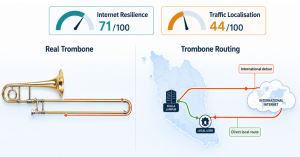
This inefficient pathway, known as “trombone routing”, heavily relies on international subsea cables. Currently, five out of the twenty-nine subsea cables that Malaysia depends on pass through geopolitically sensitive corridors like the Red Sea and the Strait of Hormuz. When global traffic routes are compromised, whether by physical damage, cyber warfare, or natural disasters, local networks experience severe latency spikes, rerouting delays, and potential service outages.
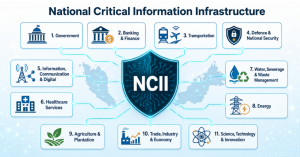
For National Critical Information Infrastructure (NCII) sectors, such as banking, healthcare, and transportation, these single points of failure are unacceptable operational risks.
The Standard for Sectoral Resilience
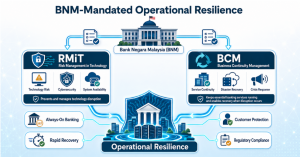
Malaysia’s highly digitalised financial sector offers a blueprint for proactive risk management. Bank Negara Malaysia (BNM) strictly mandates operational resilience through its Risk Management in Technology (RMiT) and Business Continuity Management (BCM) frameworks.
Key takeaways from these policies include:
- Avoiding Single Points of Failure: Overdependence on a single network route, transit provider, or external system creates systemic vulnerability.
- Infrastructure Diversification: Institutions must run cloud environments on different virtual hosts and utilise multiple distribution paths to ensure high availability.
- Mandatory Resilience Frameworks: Financial entities are required to establish robust contingency arrangements, including isolated recovery environments, to swiftly restore essential services during a disruption.
To meet these stringent standards, enterprises must take control of how their data is routed. This is where a modern Internet Exchange (IX) becomes an indispensable asset.
The DE-CIX JBIX Solution: Anchoring Data Locally
DE-CIX JBIX provides the neutral, carrier-grade interconnection platforms required to keep local traffic local, drastically reducing our dependency on vulnerable global transit routes. By increasing local peering efficiency, we help networks exchange data directly on Malaysian soil.
1. Distributed Peering Hubs
A resilient network cannot rely on a single central node. DE-CIX operates a highly distributed architecture across Malaysia, spanning Greater Kuala Lumpur, Johor Bahru (JBIX), and Penang (PIX). This enables digital ecosystems to connect seamlessly at the edge, localising traffic for latency-sensitive AI workloads and smart manufacturing without unnecessary international detours.
2. Secure, Private Cloud Connectivity
Relying on the public internet exposes enterprises to hacktivism and global outages. Enterprises can instead leverage solutions such as DirectCLOUD and VirtualPNI. These products allow organisations to establish dedicated, private connections directly to major cloud service providers, such as Microsoft Azure, AWS, and Google Cloud, completely bypassing the public internet. This ensures compliance with strict data sovereignty and security regulations while offering guaranteed bandwidth.
3. Built-In Redundancy
Our infrastructure is built upon the globally proven DE-CIX Apollon platform, featuring carrier- and data centre-neutral facilities. If one physical path is compromised, traffic is dynamically and securely rerouted through alternative local pathways, eliminating single points of failure and aligning with national RMiT guidelines.
Fortifying the Future
As billions of ringgit flow into Malaysia to construct high-density AI data centres, physical buildings and power grids are only part of the equation. True digital resilience requires an interconnected ecosystem that empowers local peering, reduces latency, and mitigates global risks.
By localising traffic and establishing secure, direct pathways to the cloud, DE-CIX JBIX ensures that our critical sectors remain online, efficient, and secure, regardless of the crises unfolding beyond our borders.
Interconnect in Malaysia. Scale Across ASEAN. Connect Globally.
Working Hours: Monday – Friday, 9am – 6pm
Call Us: +603 9212 5961
Email Us: enquiry@de-cix.my