Beyond Transit Costs: The Hidden ROI of IX Membership for SEA Telcos

Southeast Asia’s telecommunications market is entering a new performance era driven by the expansion of 5G, rising cloud consumption, and the shift of AI-driven applications closer to end users. As content, gaming, video, fintech, enterprise cloud, and connected devices generate heavier traffic patterns across the region, telcos and ISPs are presented with significant growth opportunities. However, this surge also exposes a structural vulnerability.
Networks built primarily around traditional IP transit are increasingly forced to carry more traffic across longer, inefficient routes at higher costs, resulting in diminished control over overall performance. Consequently, the industry focus has shifted; the critical challenge is no longer merely accommodating traffic growth but ensuring that underlying network architectures are fully equipped to scale securely and efficiently alongside it.
The Transit-Only Model Is Reaching Its Limit
While IP transit has traditionally served as the default route to global connectivity, an over-reliance on this model in today’s high-demand environment creates significant commercial and technical drag. Data frequently travels through unnecessary, circuitous routes, with popular content exchanged across distant locations rather than efficient, localised interconnection points. Consequently, network teams are forced to manage escalating transit commitments while end users suffer from inconsistent latency during peak usage periods.
These underlying structural issues rarely appear as a single financial line item. Instead, they compound into inflated operational costs, diminished routing control, sluggish application performance, and a degraded overall customer experience. For telecommunications providers and ISPs competing on network speed, quality, and reliability, resolving these hidden bottlenecks is a critical business imperative.
Peering Changes the Economics of Traffic
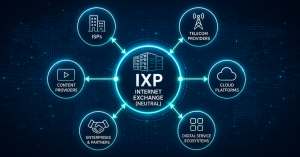
Internet Exchange (IX) membership fundamentally transforms the economics of network traffic by shifting away from an exclusive reliance on upstream transit. Through a neutral interconnection platform, networks can exchange data directly with cloud platforms, content providers, and digital service ecosystems. This direct peering model introduces three critical operational advantages:
- Reduced Transit Dependence: High volumes of traffic are offloaded from paid IP transit to direct exchange points.
- Optimised Routing Pathways: Data travels across shorter, highly efficient routes, bypassing congested public transit nodes.
- Enhanced Network Control: Operators gain precise control over routing architecture, performance stability, and infrastructure scalability.
Ultimately, for telecommunications providers and ISPs, the return on investment extends far beyond simple cost reduction. Peering delivers superior network quality, robust service differentiation, and the operational predictability required to excel in a high-demand digital market.
Lower Latency Is Now a Commercial Advantage
Low latency has fundamentally shifted from a mere technical benchmark to a strict commercial necessity. Modern digital ecosystems—spanning video streaming, mobile gaming, digital banking, enterprise cloud computing, IoT, and AI-powered applications—depend entirely on instantaneous response times. When data traverses extended, circuitous routes, the inherent risks of delay, network congestion, and inconsistent performance rise significantly. This structural challenge is particularly pronounced across Southeast Asia, where traffic frequently navigates a fragmented web of multiple national and regional networks before ever reaching its destination.
Direct peering through an IX resolves this geographical drag by keeping data localised closer to its point of consumption. By adopting a carrier-neutral IX infrastructure, telecommunications providers and ISPs can effectively shorten network paths and elevate the overall end-user experience, all while avoiding restrictive single-vendor lock-in. This localised, direct-exchange approach transforms network latency from an operational hurdle into a distinct competitive advantage.
The Hidden ROI: Resilience, Control and Customer Experience

While immediate transit savings often present the initial business case for IX membership, the most profound return on investment emerges from architectural resilience. By establishing a diverse matrix of direct peering relationships, networks actively decrease their dependence on a limited set of upstream transit routes. This structural diversification enhances routing flexibility, builds critical redundancy, and significantly mitigates the operational impact of unexpected congestion or service disruptions.
For telecommunications providers and ISPs, these technical improvements directly generate commercial leverage. Robust routing control enables superior service-level performance, directly reducing customer complaints while solidifying enterprise confidence in network reliability. Furthermore, the ability to engineer traffic with high predictability allows network teams to plan future capacity with absolute precision. Ultimately, carrier-neutral IX membership elevates interconnection from a mere operational utility into a formidable strategic asset.
Why Carrier-Neutrality Matters
Not all interconnection models offer the same level of freedom. In a market where enterprises increasingly distribute their infrastructure across multiple clouds, diverse locations, and varied connectivity partners, avoiding vendor lock-in is a structural necessity. A carrier-neutral IX grants operators the vital autonomy to connect across a vast digital ecosystem without being restricted to a single data centre, carrier, or upstream provider. For telecommunications networks and ISPs, this fundamental neutrality acts as the ultimate safeguard for operational flexibility.
This independent architecture directly enables stronger peering density, opens broader partnership options, and establishes a clear path for regional expansion. DE-CIX Malaysia delivers this essential neutral interconnection layer, empowering networks to seamlessly integrate with critical digital ecosystems. By providing an AI-ready, secure, and highly resilient peering environment, operators can confidently support their long-term scalability.
Built for the AI and Cloud Era
The next phase of telecommunications growth is fundamentally driven by the escalating demands of AI, cloud computing, and edge infrastructure. Workloads such as AI inference, real-time analytics, smart manufacturing, and digital financial services require lightning-fast, secure, and resilient data exchange. These advanced applications cannot function effectively when tethered to extended, unpredictable transit routes; they demand an interconnection fabric specifically engineered for
high-performance localisation.
Through DE-CIX Malaysia, telecommunications providers and ISPs gain access to a fully
carrier-neutral platform offering direct peering, seamless cloud connectivity, private interconnection, and robust security services. This architecture ensures direct cloud access and secure private pathways while driving essential traffic localisation. For operators serving the enterprise, content, and AI-driven markets, this AI-ready infrastructure establishes a formidable foundation for sustainable revenue growth.
Malaysia as a Regional Interconnection Base
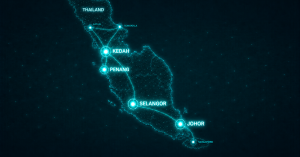
Malaysia is rapidly emerging as a strategic digital bridge for Southeast Asia. Its robust connectivity links, surging cloud demand, and proximity to key ASEAN markets establish it as the natural hub for secure and resilient regional interconnection.
For telecommunications networks and ISPs, Malaysia represents a powerful platform to efficiently access the broader ASEAN digital economy. DE-CIX Malaysia provides the neutral, AI-ready infrastructure to execute this expansion, empowering operators to seamlessly scale.
The Strategic Advantage for Telcos and ISPs
The future of telecommunications competition will no longer be defined solely by bandwidth capacity, but by how intelligently networks exchange traffic. Operators continuing to rely primarily on traditional transit risk facing escalating cost pressures, routing inefficiencies, and diminished control over the overall end-user experience.
Conversely, investing in IX membership establishes a resilient foundation for traffic optimisation, seamless cloud access, and sustainable regional growth. The hidden ROI of a carrier-neutral, AI-ready interconnection platform is undeniable: it delivers drastically lower transit dependency, superior latency, precise routing control, and unparalleled network resilience.
For telecommunications providers and ISPs across Southeast Asia, secure interconnection has evolved from a backend technical necessity into a critical commercial growth strategy.
Interconnect in Malaysia. Scale Across ASEAN. Connect Globally.
Working Hours: Monday – Friday, 9am – 6pm
Call Us: +603 9212 5961
Email Us: enquiry@de-cix.my